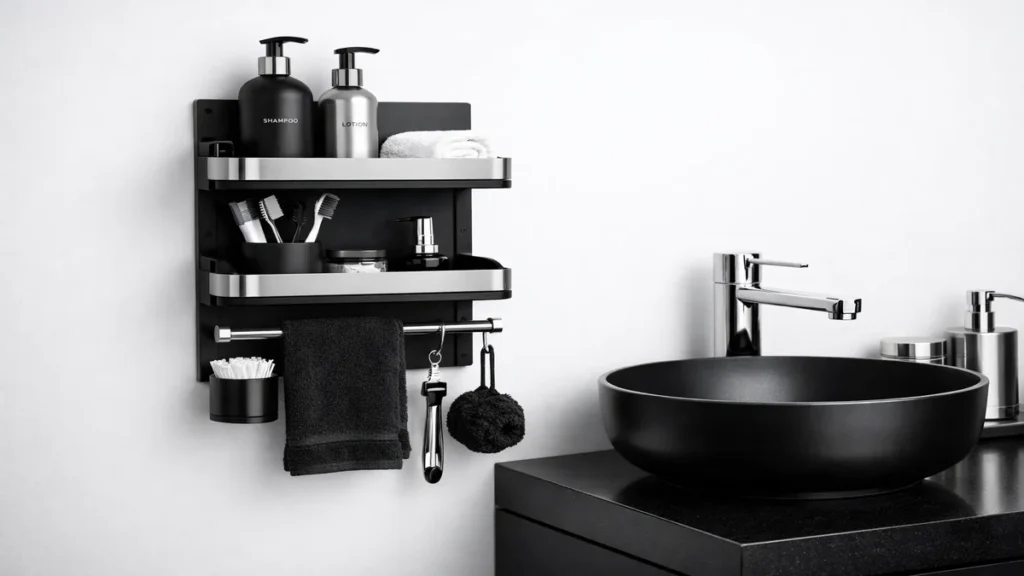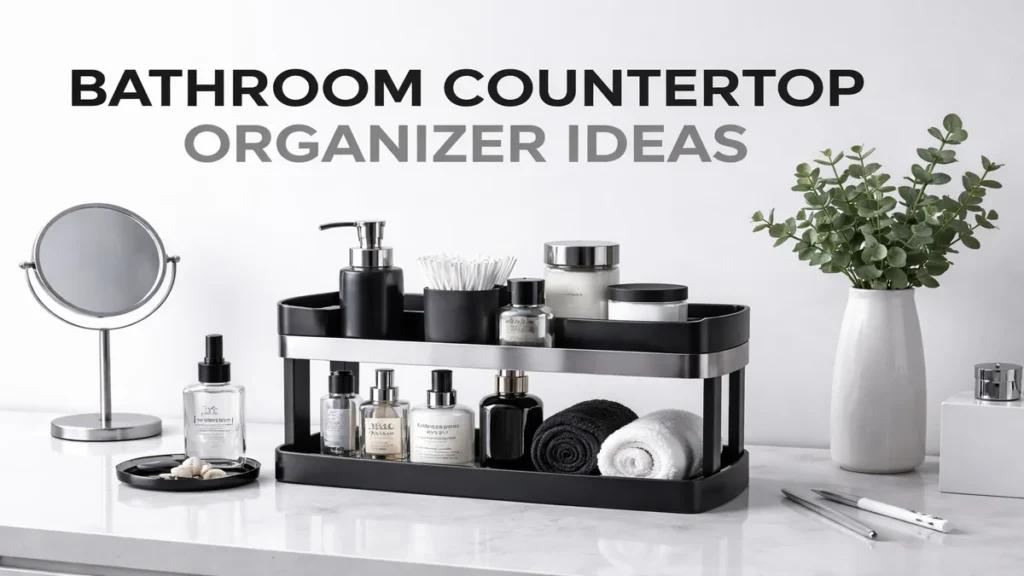
Most people struggle with bathroom countertop organizer ideas because they buy products before defining the routine the space needs to support. That usually leads to clutter that looks organized for a day or two, then collapses under normal use.
This guide focuses on practical ways to evaluate bathroom countertop organizer ideas so the final setup stays useful, not just attractive.
Affiliate Disclosure: This post may contain affiliate links. If you buy through them, we may earn a commission at no extra cost to you.
Quick Picks: Our Top Recommendations: Bathroom Countertop Organizer Ideas
If you need quick results, narrow bathroom countertop organizer ideas choices by footprint, retrieval speed, and weekly reset effort before anything else. Those three filters immediately remove the options that look good on paper but create extra friction in daily life.
Shortlist only the setups that fit the space cleanly and stay easy to maintain when routines get rushed. That gives you a more reliable starting point than chasing the longest feature list.
- Measure: how quickly items can be reached during normal use
- Check: whether the setup blocks movement or visual clarity
- Keep: only the steps people will repeat every day
Start by measuring what happens during a normal week, not an ideal one. A setup that looks tidy on day one but slows down daily use will not hold up. Focus on access speed, overflow control, and how easy it is to reset the area after busy days. For bathroom countertop organizer ideas, keep the standard practical: faster access, lower visual noise, and fewer steps to reset the space.
It helps to test one change at a time instead of replacing everything at once. That makes it easier to see which adjustment actually improves the routine and which one only adds visual clutter. Small gains in consistency usually beat dramatic but fragile overhauls. With bathroom countertop organizer ideas, the strongest systems are usually the ones people can maintain without reminders or extra effort.
Why Trust Our Recommendations
The most useful recommendations are based on repeatable criteria, not broad claims about style or convenience. Look at whether the setup stays stable under frequent use, whether it is easy to clean, and whether it respects the limits of the room.
A solution that performs well across those three checks is much more likely to keep working over time.
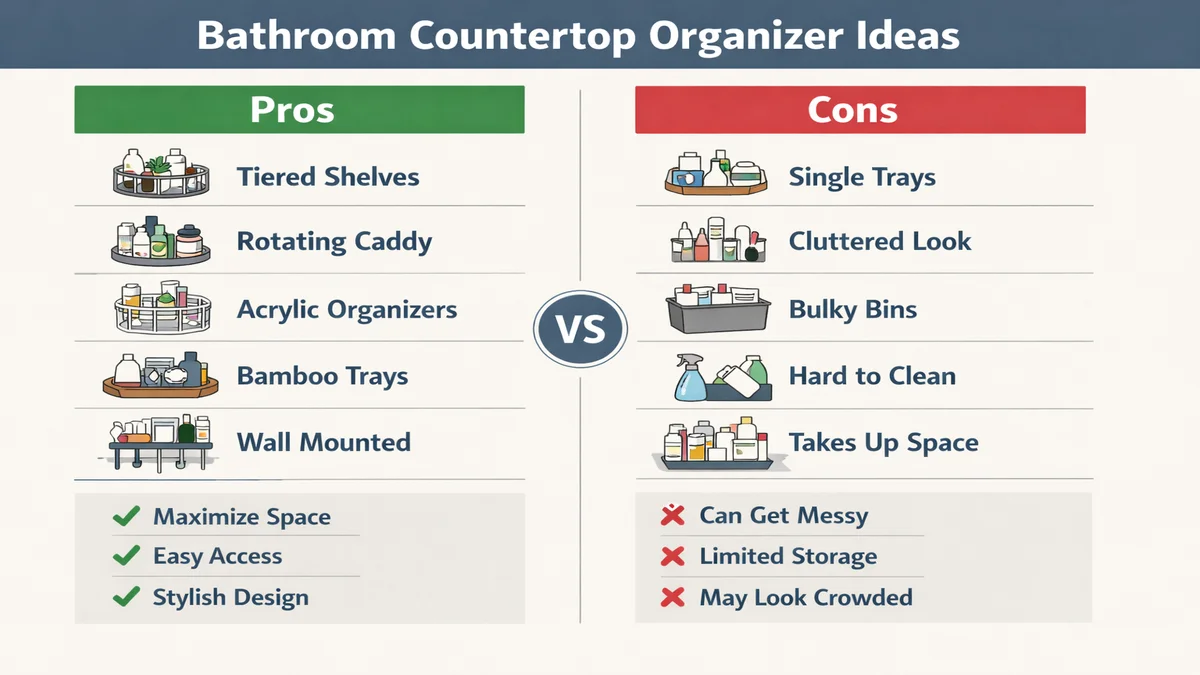
It helps to test one change at a time instead of replacing everything at once. That makes it easier to see which adjustment actually improves the routine and which one only adds visual clutter. Small gains in consistency usually beat dramatic but fragile overhauls. With bathroom countertop organizer ideas, the strongest systems are usually the ones people can maintain without reminders or extra effort.
Look for signs of friction rather than chasing perfect aesthetics. If people avoid putting items back, reach past obstacles, or create temporary piles nearby, the system is too complicated. Strong solutions remove decisions and reduce extra motions. A smart bathroom countertop organizer ideas setup should stay useful on busy days, not just when the room has been freshly arranged.
What to Look For When Choosing
For bathroom countertop organizer ideas, start with constraints before aesthetics: available depth, traffic flow, and how often each item is used. Once those basics are clear, it becomes easier to choose storage that supports movement instead of interrupting it.
The best layout is usually the one that removes an extra step from the daily routine, not the one with the most compartments.
- Measure: how quickly items can be reached during normal use
- Check: whether the setup blocks movement or visual clarity
- Keep: only the steps people will repeat every day
Build Quality and Ergonomics
Think of Build Quality and Ergonomics as a practical trade-off, not a perfect solution. Every option gives you something and asks for something in return, whether that is floor space, effort, or flexibility.
The better choice is the one whose trade-offs are easiest to live with every day. Treat visual order as a side effect of good function. When the frequently used items are easy to reach and easy to return, the space usually starts looking calmer without extra effort.
Performance and Reliability
Use Performance and Reliability as a decision checkpoint rather than a generic talking point. Ask what it improves, where it adds friction, and how much maintenance it creates after the first week.
If the answer is still clear after real use, the choice is probably solid. The best changes usually remove one recurring annoyance instead of trying to solve every problem at once. That is why smaller, testable adjustments often outperform complete redesigns.
Price, Warranty, and Value
Price, Warranty, and Value works best when you define the success metric before buying or rearranging anything. That could be faster access, less visual spillover, or a shorter weekly reset.
Without a concrete measure, it becomes too easy to confuse novelty with improvement. Price only matters in context. A cheaper setup that creates daily annoyance often costs more in effort over time than a slightly better fit.
Look for signs of friction rather than chasing perfect aesthetics. If people avoid putting items back, reach past obstacles, or create temporary piles nearby, the system is too complicated. Strong solutions remove decisions and reduce extra motions. When evaluating bathroom countertop organizer ideas, prioritize repeatable habits over impressive-looking but fragile solutions.
Bathroom Countertop Organizer Ideas Reviews and Recommendations
The easiest way to judge this, bathroom countertop organizer ideas reviews and recommendations should be judged by what improves routine, not just appearance. Durability matters, but maintenance matters just as much. If a product is hard to wipe down, awkward to refill, or annoying to move, people stop using it properly. Choose systems that can survive ordinary habits, not just careful ones.
The best bathroom countertop organizer ideas options usually succeed because they simplify habits instead of adding extra decisions.
Best Overall
Use Best Overall as a decision checkpoint rather than a generic talking point. Ask what it improves, where it adds friction, and how much maintenance it creates after the first week.
If the answer is still clear after real use, the choice is probably solid. Price only matters in context. A cheaper setup that creates daily annoyance often costs more in effort over time than a slightly better fit.
Best Value
Best Value works best when you define the success metric before buying or rearranging anything. That could be faster access, less visual spillover, or a shorter weekly reset.
Without a concrete measure, it becomes too easy to confuse novelty with improvement. Price only matters in context. A cheaper setup that creates daily annoyance often costs more in effort over time than a slightly better fit.
Best Premium
Think of Best Premium as a practical trade-off, not a perfect solution. Every option gives you something and asks for something in return, whether that is floor space, effort, or flexibility.
The better choice is the one whose trade-offs are easiest to live with every day. Price only matters in context. A cheaper setup that creates daily annoyance often costs more in effort over time than a slightly better fit.
Best Budget
Use Best Budget as a decision checkpoint rather than a generic talking point. Ask what it improves, where it adds friction, and how much maintenance it creates after the first week.
If the answer is still clear after real use, the choice is probably solid. Price only matters in context. A cheaper setup that creates daily annoyance often costs more in effort over time than a slightly better fit.
Comparison Table
Comparison only becomes useful when the criteria are practical. Focus on capacity, maintenance effort, and access speed rather than vague labels like premium or versatile.
That makes it easier to see which option truly matches the way the space gets used.
- Measure: how quickly items can be reached during normal use
- Check: whether the setup blocks movement or visual clarity
- Keep: only the steps people will repeat every day
When comparing options, separate convenience from capacity. Bigger storage is not always better if it blocks movement or hides frequently used items. A leaner setup with faster retrieval often performs better over time. The right bathroom countertop organizer ideas choice should make the next action simpler, not add another layer of effort.
Frequently Asked Questions
The real test, frequently asked questions should be judged by what improves routine, not just appearance. Start by measuring what happens during a normal week, not an ideal one. A setup that looks tidy on day one but slows down daily use will not hold up. Focus on access speed, overflow control, and how easy it is to reset the area after busy days.
For bathroom countertop organizer ideas, favor choices that still feel easy to maintain after the first week of use.
What is the best option?
Think of What is the best option? as a practical trade-off, not a perfect solution. Every option gives you something and asks for something in return, whether that is floor space, effort, or flexibility.
The better choice is the one whose trade-offs are easiest to live with every day. Match the solution to the user profile and room constraints first. That keeps recommendations from becoming vague or overly broad.
How much should I spend?
Use How much should I spend? as a decision checkpoint rather than a generic talking point. Ask what it improves, where it adds friction, and how much maintenance it creates after the first week.
If the answer is still clear after real use, the choice is probably solid. Treat visual order as a side effect of good function. When the frequently used items are easy to reach and easy to return, the space usually starts looking calmer without extra effort.
How long does it last?
How long does it last? works best when you define the success metric before buying or rearranging anything. That could be faster access, less visual spillover, or a shorter weekly reset.
Without a concrete measure, it becomes too easy to confuse novelty with improvement. The best changes usually remove one recurring annoyance instead of trying to solve every problem at once. That is why smaller, testable adjustments often outperform complete redesigns.
Conclusion
The right bathroom countertop organizer ideas approach is the one people can actually maintain. If the system reduces visual noise, speeds up access, and keeps weekly reset easy, it is probably the right fit.
Make the next change small, test it for a week, and keep only what continues to work in normal life.
A useful setup should make the next action obvious. If people have to stop and think about where something goes, the system is carrying too much complexity for the amount of value it returns. For bathroom countertop organizer ideas, keep the standard practical: faster access, lower visual noise, and fewer steps to reset the space.