Disclosure: This article is designed to help you compare storage approaches and room layouts. It does not claim hands-on testing of every product type mentioned. The goal is better fit, calmer rooms, and smarter buying decisions.
The best small bedroom storage ideas do not start with buying a pile of bins. They start with deciding what the room needs to do every day: sleep well, move easily, and keep the most-used items accessible without turning every wall into visual clutter. In a small bedroom, storage has to earn its footprint.
That is why the smartest upgrades are usually the ones that use wasted space, reduce visible mess, and replace weak furniture choices with pieces that quietly do more. A room can hold more without feeling more crowded, but only if the storage plan protects walking space, bedside function, and visual calm at the same time.
How to judge whether a storage idea is actually worth it
Before moving furniture or buying organizers, use a short filter. A good small-bedroom solution should do at least two of these three things: free up floor space, reduce visual noise, or make daily items faster to reach. If it only adds containers without improving the routine, it is probably clutter wearing nicer clothes.
- Protect movement: The room should still feel easy to walk through when drawers are open and laundry is in rotation.
- Separate daily-use from backup items: Nighttime essentials should stay easy to grab; seasonal or low-use items can move higher or lower.
- Match storage to item type: Soft goods, shoes, books, and chargers do not all need the same kind of home.
- Prefer dual-purpose furniture: In a small bedroom, a piece that stores and functions is usually worth more than a decorative extra table.
Apartment Therapy’s roundup of small bedroom storage ideas is a useful benchmark because it focuses on overlooked surfaces and awkward gaps instead of pretending every small room needs a complete makeover. That is the right mindset here too: better use of existing space usually beats adding bulky furniture.
1. Use the space under the bed before you crowd the perimeter
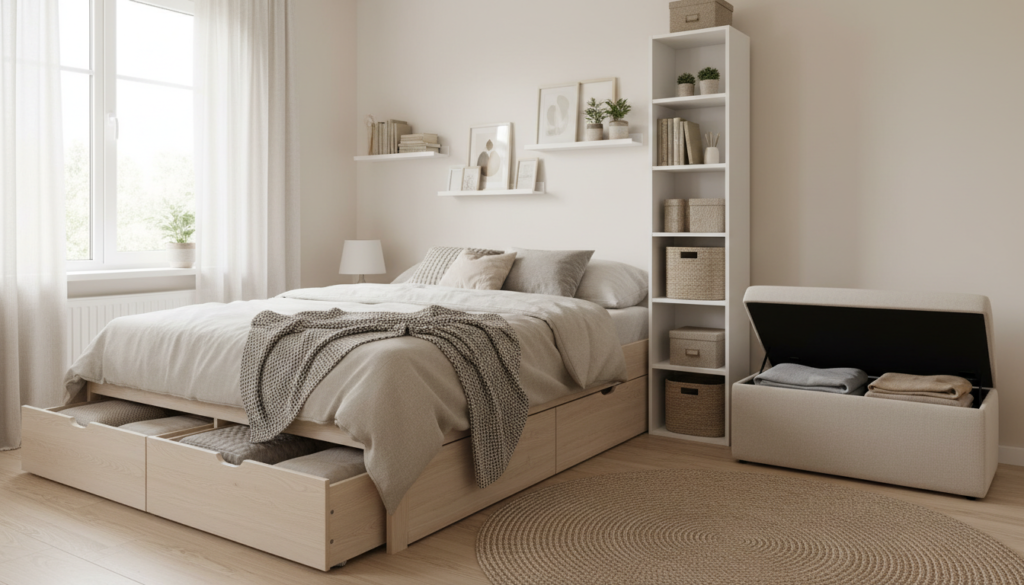
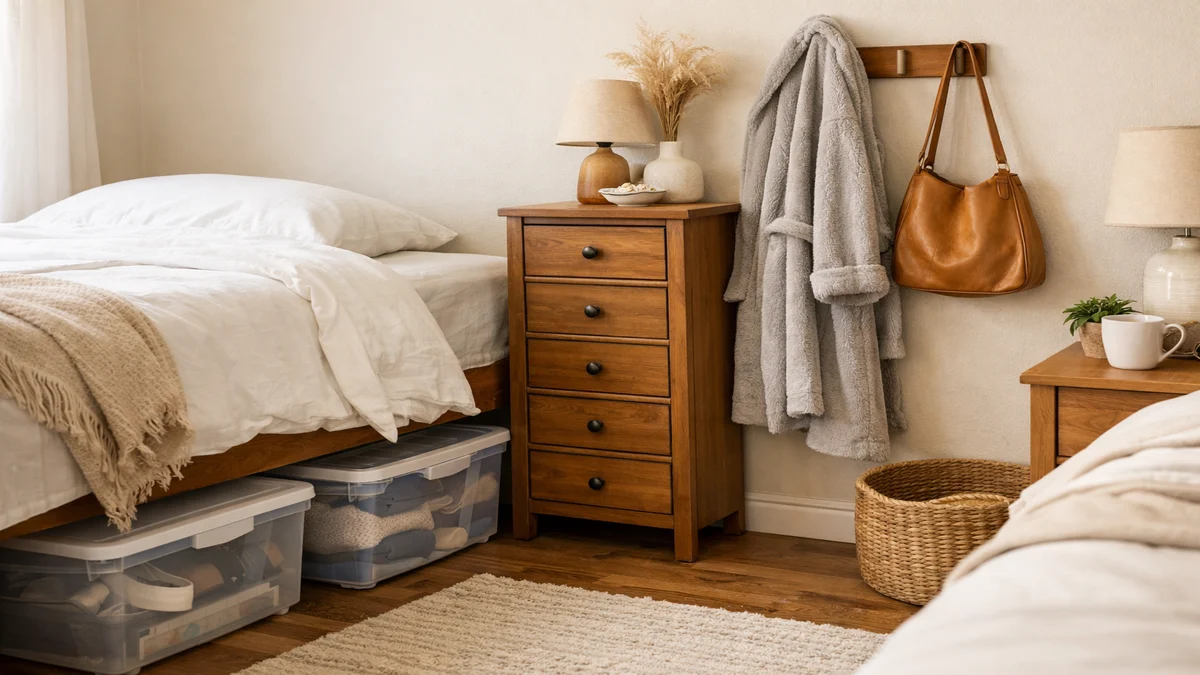
If your bed frame allows it, under-bed storage is usually the highest-value move in the room. It uses hidden square footage, keeps low-priority items out of sight, and avoids making the walls or corners feel busier. It is especially useful for off-season clothing, spare linens, extra pillows, and guest items you do not need to access every morning.
The mistake is turning that zone into a junk drawer. Use low-profile containers, label them, and group by category. If you are constantly digging through the bins, the system is too vague.
This is also why under-bed storage works better as an overflow zone than a daily-use zone. Shoes you wear every day, your charger, or a sleep mask should not require kneeling and sliding boxes around. For those items, bedside or vertical storage makes more sense.
2. Replace a basic nightstand with something that stores more
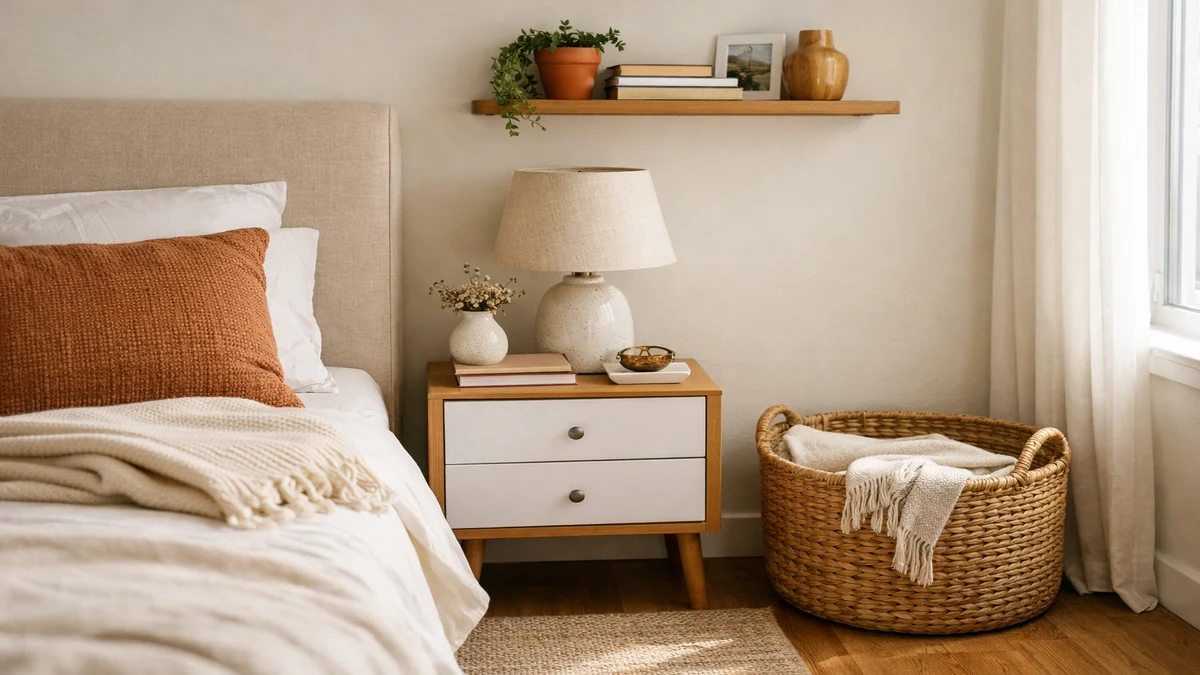
A tiny table may look lighter, but it often pushes clutter into visible piles. A nightstand with drawers, a small dresser, or even a compact cubby unit usually gives the room more control without taking much more floor space.
Best for: people who keep books, skincare, medication, chargers, or small accessories near the bed.
Probably skip: anyone whose room already feels furniture-heavy on both sides of the bed.
If you only have room for one bedside surface, make it count. Good Housekeeping’s broader bedroom-storage guidance often comes back to the same principle: small rooms improve fastest when each furniture piece handles more than one job.
3. Build upward with shelves, not outward with extra furniture
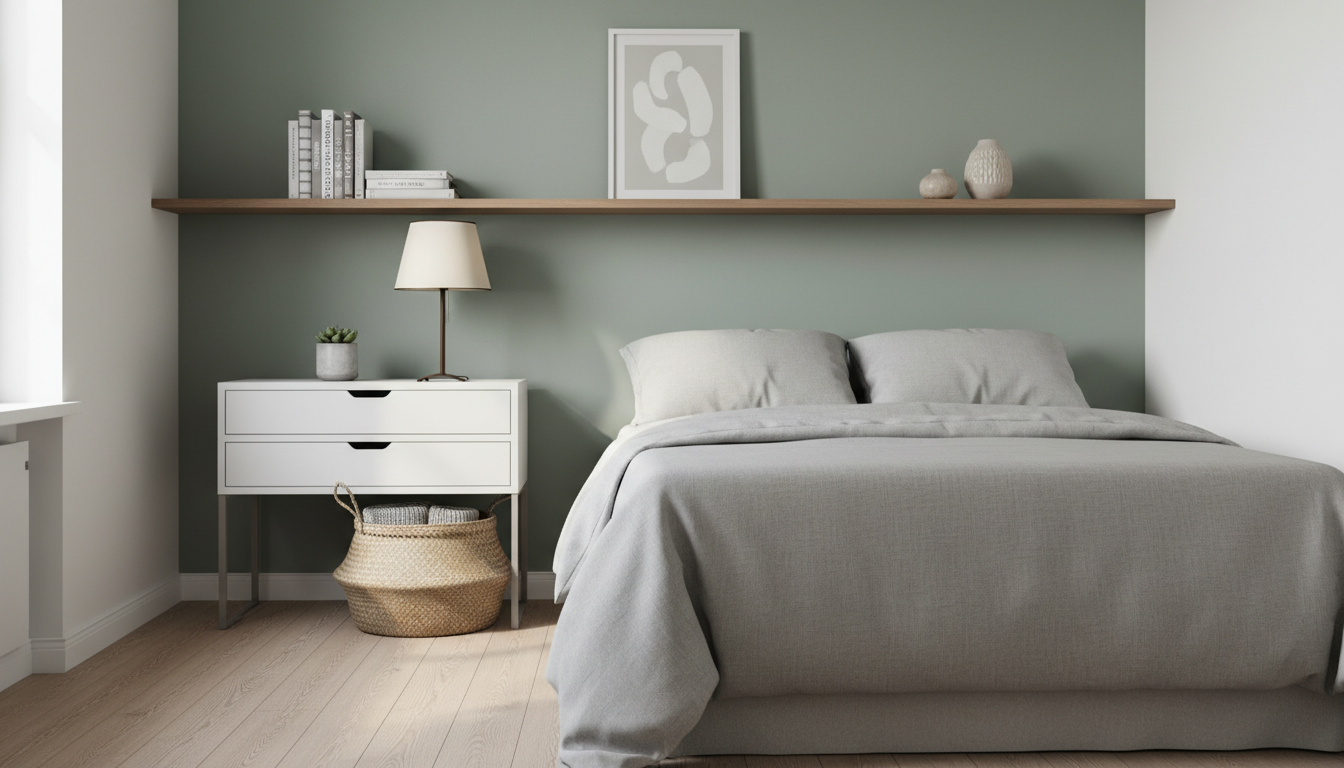
In most small bedrooms, the best unused real estate is vertical. Shelves above a desk, dresser, or even over the bed can store books, baskets, and decor without taking up new floor area. This works especially well when the room has high ceilings or a narrow layout.
The key is restraint. Open shelving looks good when it holds edited categories, not every loose object you own. Use baskets for smaller items, leave some breathing room between objects, and keep the most visually busy items behind doors or in bins.
If the goal is a calmer room, vertical storage should help the eye travel cleanly instead of creating a wall of tiny distractions. IKEA’s small bedroom ideas are useful here because they lean on layered vertical function rather than oversized furniture swaps.
4. Use awkward gaps on purpose
Small bedrooms often have narrow spaces that feel too small to matter: a few inches beside a dresser, a sliver between the bed and the wall, or the vertical side of a nightstand. Those are often the right places for hooks, slim rolling carts, or narrow catch-all solutions.
- Use side hooks for headphones, robes, or a sleep mask
- Slide a narrow rolling cart into a true dead gap
- Add a wall hook rail where floor furniture would feel heavy
- Use a shallow ledge instead of a deeper shelf when the walkway is tight
These micro-zones work best when they solve one repeating problem. If they start collecting random extras, they stop being efficient and start reading as clutter.
5. Store by routine, not by perfect category
One reason small bedrooms get messy quickly is that storage systems are organized for logic instead of real life. If pajamas, chargers, and nighttime reading all belong to the same evening routine, they should live near the bed even if they are technically different categories. If work items leave the room every morning, they should be packed near the exit, not scattered across multiple drawers.
Routine-based storage tends to hold up better because it reduces extra steps. That matters more than perfect labeling. A system that is slightly less elegant but easy to maintain usually beats a prettier setup that falls apart after four days.
6. Use closed storage where visual calm matters most
Open bins and shelves are fine for some zones, but a small bedroom benefits from at least a little hidden storage. Closed drawers, baskets with lids, or fabric bins in a shelf unit can make the room feel more restful by removing visual chatter.
This matters most if your bedroom also functions as a workspace, dressing area, or catch-all. In those rooms, visible storage fills up fast and makes the space feel like it is always in use. Closed storage creates a cleaner stopping point.
That same thinking supports better sleep too. If the room feels less chaotic at night, the environment is usually more comfortable overall, which is one reason our best bedding for better sleep guide emphasizes reducing friction and visual overload, not just buying softer layers.
7. Keep decorative storage from taking over the room
Storage can absolutely look good, but beauty should come after fit. A large woven basket, bench, or stylish rack is not a smart buy if it steals circulation space or turns the room into an obstacle course. The best decorative storage still supports the way the room works on a rushed weekday.
If you want the bedroom to feel warm rather than purely utilitarian, keep one or two visible storage pieces intentional and let everything else disappear into better systems. That creates texture without turning the room into a display shelf.
For a softer look, our boho bedroom ideas article shows how texture and calm can still work in a functional room, especially when the visible elements are limited and purposeful.
A simple comparison table for common small-bedroom upgrades
| Storage move | Best for | Main upside | Watch out for |
|---|---|---|---|
| Under-bed containers | Linens, off-season clothes, backup items | High capacity with low visual impact | Becomes messy fast without labels |
| Drawer nightstand or slim dresser | Daily bedside items | Adds function without much extra footprint | Can feel bulky in very narrow layouts |
| Wall shelves | Books, baskets, display pieces | Uses vertical space well | Open storage can look crowded |
| Hook rail or peg system | Bags, robes, lightweight accessories | Keeps the floor clear | Too many hanging items adds visual noise |
| Slim rolling cart | Small gaps and flexible overflow | Easy to move and repurpose | Only useful if the gap is truly dead space |
What to buy first if the room feels crowded right now
If the room feels full and frustrating, use this order:
- Start under the bed for low-use items and spare linens.
- Upgrade the nightstand if clutter collects near the bed every day.
- Add one vertical shelf zone above furniture you already own.
- Use one awkward gap for a slim, problem-specific solution.
- Then edit what stays visible so the room can feel restful again.
This order works because it fixes the biggest pressure points first without making the room look busier. It also protects the sleep zone, which matters more than squeezing in one more storage basket just because it fits.
If you are also carving out a quiet corner, our cozy reading nook ideas guide can help you keep comfort and function balanced instead of layering too many small furniture pieces into one room.
Frequently asked questions
What is the best storage for a very small bedroom?
Usually a mix of under-bed storage, one stronger bedside piece, and selective vertical shelving. That combination adds capacity without stealing too much walking space.
How do you add storage without making a small bedroom feel cramped?
Prioritize hidden storage, use dead space, and avoid adding multiple bulky pieces at the perimeter. Storage should reduce visible clutter, not create more of it.
Are storage benches worth it in a small bedroom?
Only if you truly have room at the foot of the bed or under a window. In many small rooms, a bench looks appealing but interrupts circulation too much.
Should open shelving be avoided in small bedrooms?
Not entirely, but it should be edited carefully. A few organized shelves work well; too many small exposed items can make the room feel visually noisy.
Final takeaway
The best small bedroom storage ideas are the ones that make the room easier to use and easier to relax in. Start with hidden capacity, upgrade the furniture that already earns a footprint, and only add visible storage when it genuinely improves access or mood. In a small bedroom, calm is not separate from function. It is the proof that the system is working.