Disclosure: This guide is meant to help you compare organizing approaches and room-layout decisions. It does not claim every product type was personally tested. The goal is a calmer, more usable bedroom that still feels like a place to rest.
The best bedroom organization tips are not the ones that turn your room into a storage showroom. They are the ones that reduce friction every day: clothes are easier to put away, surfaces stay clearer, and the room still feels restful instead of overfilled. In other words, organization has to support sleep and daily routines, not fight them.
That is why the biggest bedroom wins usually come from editing categories, fixing furniture that underperforms, and assigning storage by routine instead of by perfection. If the system is annoying to maintain, it will not survive a busy week.
Start by organizing the room around what happens there
Bedrooms often carry too many jobs: sleeping, dressing, charging devices, reading, maybe even light work. The first step is deciding what the room should support every day and what should move elsewhere if possible. Once that is clear, organizing decisions get easier because you are no longer trying to store everything with equal priority.
- Near the bed: keep only true evening and morning essentials.
- Inside easy-reach drawers: daily clothes, undergarments, and repeated-use accessories.
- Higher or hidden zones: extra linens, backups, and seasonal items.
- Out of the bedroom if possible: paperwork, hobby overflow, and random household storage.
BHG’s decluttering and room-organization coverage is useful here because it keeps coming back to a simple truth: the room works better when storage matches habits instead of generic categories.
1. Fix the surfaces that collect clutter first
If your dresser top, nightstand, or chair is always covered, do not start by buying more baskets. Start by asking why those items are landing there. Usually the problem is one of three things: there is no home nearby, the existing home is annoying to use, or you are storing too many low-priority items in the most convenient zone.
A fast reset looks like this:
- Clear the surface completely.
- Return only the items used daily or nightly.
- Move the rest into a drawer, bin, or a different room based on frequency.
- If an item still keeps resurfacing, create a better home within one step of where it lands.
2. Upgrade weak furniture instead of adding random organizers
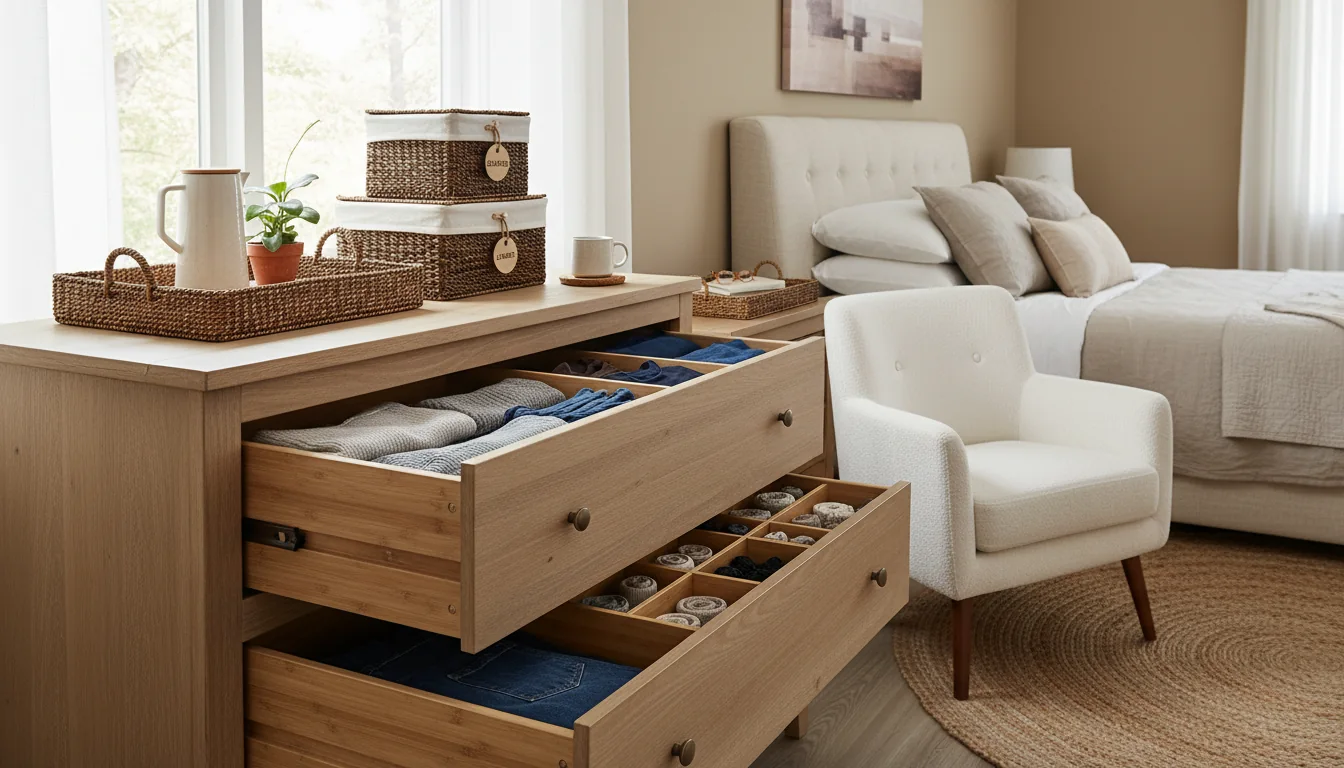
A bedroom becomes easier to organize when each major piece earns its footprint. A nightstand with drawers beats a pretty table that creates piles. A dresser that actually fits your clothing beats multiple small add-ons scattered around the room. A shelf with baskets often outperforms decorative storage that cannot hide the mess.
This is also where our small bedroom storage ideas guide overlaps with organizing advice: capacity matters, but calm matters too. Better furniture usually improves both.
3. Store by routine, not by perfect category
One of the most practical bedroom organization tips is grouping things by when you use them, not by what they are. Pajamas, lip balm, chargers, and a sleep mask belong together if they all support the same evening routine. That might be less “pure” than organizing by product type, but it tends to last longer in real homes.
Good routine-based zones:
- Bedside reset zone for night items
- Morning getting-ready zone in top dresser drawers
- Laundry transition zone for wear-again items versus wash-now items
- Out-the-door zone for jewelry, wallet, watch, or bag
4. Use closed storage where visual calm matters most
Open storage can look pretty online, but bedrooms benefit from at least some hidden storage. Closed drawers, lidded baskets, and bins inside shelves help the room feel more restful by reducing visual chatter. That matters more in a bedroom than in a pantry or garage, because the room is supposed to help you wind down.
If your room always looks busy even after tidying, visible storage may be part of the problem. Try moving the visually noisy categories behind doors or into matching bins.
5. Set limits for “just in case” items
Bedrooms quietly fill up with extras: duplicate blankets, old chargers, products you might use later, or clothes waiting for the “right occasion.” These are common clutter sources because they feel useful enough to keep but not important enough to manage well. Put a real limit on them.
| Category | Keep easy to reach | Store higher/hidden | Consider editing down |
|---|---|---|---|
| Everyday clothing | Yes | No | No |
| Extra bedding | One quick-change set | Yes | If it exceeds realistic use |
| Beauty backups | Only current favorites | Yes | Yes |
| Chargers and small tech | Daily-use only | Some backups | Yes if outdated |
| Decor pieces | Only what improves the room | Rarely | Yes if it creates crowding |
6. Build a 10-minute reset that keeps the system alive
The best organizing plan is the one that can survive a normal Tuesday. Give the room a short closing routine:
- Return bedside clutter to its zone
- Hang or basket the wear-again clothes immediately
- Put dirty laundry straight into the hamper
- Reset the dresser top so it does not become a landing strip
- Charge devices in the same place every night
If you want the room to feel more sleep-friendly too, our best bedding for better sleep article pairs well with this topic, because comfort and organization often improve together when the room has less visual noise and fewer routine breakdowns.
What to skip
- Too many tiny containers that make putting things away feel slower.
- Open storage for everything if the room already feels visually crowded.
- Buying organizers before decluttering because you may end up organizing excess.
- Instagram-perfect systems that are too rigid for daily life.
Helpful references
For additional organizing inspiration, BHG’s bedroom decluttering ideas can help you think through what deserves prime space. Apartment Therapy’s broader bedroom organizing coverage is also useful for small-space routines and habit-based storage ideas.
Frequently asked questions
How do I organize a bedroom with very little storage?
Prioritize under-bed storage, stronger bedside furniture, and one or two vertical zones. Then limit what stays visible so the room still feels calm.
What is the first thing to declutter in a bedroom?
Usually the flat surfaces and the clothing overflow. They affect how the room feels immediately and often reveal where the real system is breaking down.
Should bedroom organization be open or closed?
Usually a mix, but bedrooms benefit from more closed storage than utility spaces because hidden storage reduces visual stress.
Build bedroom zones around friction, not around labels
If you want organizing changes to last, map the room by where breakdowns happen. Most bedrooms have a drop zone, a laundry zone, a night routine zone, and a getting-ready zone even if nobody planned them on purpose. The problem is that these zones often overlap badly. Bags land on the same chair as half-worn clothes. Chargers travel from the nightstand to the dresser to the floor. Extra bedding gets stored wherever there is temporary space. A better system reduces these collisions.
That usually means giving each repeat behavior a simple, forgiving home. A hook rail or basket by the door can outperform a ?put it away later? chair. A divided drawer tray near the bed can keep lip balm, earplugs, glasses, and chargers from spreading across the nightstand. A single hamper plus one clear wear-again spot often works better than a complicated laundry-sorting setup nobody maintains.
What organizers are actually worth paying for
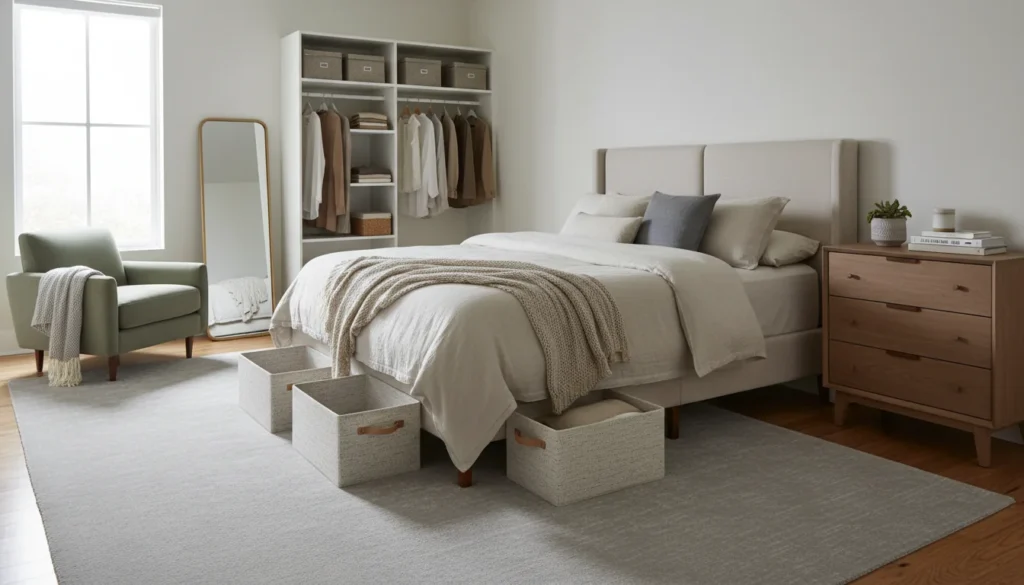
Bedrooms do not need endless accessories, but a few categories tend to earn their keep. Drawer dividers are useful when drawers become mixed-category chaos. Under-bed bins matter when closet space is limited and the bed frame gives you honest clearance. Matching baskets can help open shelves look calmer, especially when the shelf would otherwise expose cords, beauty products, or small clothing accessories. Slim vertical storage is worth considering only if it reduces clutter without blocking movement.
What is usually not worth it: tiny specialty containers for every category, decorative boxes that waste capacity, and organizers that force you to fold or sort things in a way you will not repeat on a tired weeknight. A trustworthy organizing setup should reduce effort, not increase it in the name of aesthetics.
How to keep the room restful while adding storage
Bedrooms are different from utility spaces because visual calm matters almost as much as storage capacity. If the room feels crowded after you ?organized? it, the system is still failing one of its most important jobs. That is why it often makes sense to put the messiest categories into closed furniture, reserve open shelves for attractive or low-volume items, and use the most visible surfaces for only a few daily essentials.
This is also where editing matters. Not everything needs prime space in the room where you sleep. If old tech, off-season extras, paperwork, and hobby overflow are stealing the best storage zones, the room will never feel finished for long. Good bedroom organization is not about storing more things in prettier containers. It is about making sure the room supports rest first and storage second.
A weekly reset that prevents clutter from returning
Most bedrooms stay organized when there is a short reset built into the week. Rehang or basket the wear-again clothes, change or fold the bedding, clear the nightstand back to essentials, empty the random paper or packaging that sneaks in, and return chargers to the same place. None of this is complicated, but the repetition keeps the room from drifting back toward piles. If your system only works after a full deep-clean, it is too fragile for everyday life.
The best bedroom organization tips are the ones you barely have to think about. A room that resets quickly usually feels calmer, cleaner, and easier to maintain long after the first decluttering session is over.
Final takeaway
The best bedroom organization tips make the room easier to maintain, easier to move through, and easier to rest in. Start with the clutter hotspots, fix the furniture that is failing you, and build routines around actual use instead of idealized categories. A bedroom feels organized when it supports your day and gets quiet again at night.